
Your local service guide
Good people. Practical solutions.
When plumbing starts acting differently from one day to the next, the most useful first step is not guessing at the fix. In Peoria, homeowners often notice symptoms that overlap: a shower goes weak, the kitchen sink gurgles, hot water runs out faster, or a toilet starts refilling on its own. Those can point to very different causes. Goodfellas Plumbing serves the Phoenix metro and confirms availability by phone, with clear repair options and an upfront scope before approved work. That matters because the right solution depends on what changed, where it changed, and whether the problem affects hot water, cold water, one fixture, or the whole property.
This guide is built around diagnosis, especially for changing pressure. A pressure-reducing valve is not automatically the answer, and neither is a repipe. If pressure drops only on the hot side, the water heater or a hot-side valve may be part of the story. If cold pressure is weak at one bathroom but fine at the hose bib, the issue may be local to that branch or fixture. If multiple drains are slow, that suggests a drainage problem, not a supply problem. The sections below help you describe symptoms clearly, understand what a plumber is looking for, and choose next steps that fit the actual problem rather than the loudest one.
What to do first when a plumbing problem feels urgent
Urgent plumbing situations usually become easier to manage when you sort them by risk before you sort them by repair. Active overflow, water spreading across floors, sewage backing up, or a water heater leaking onto finished surfaces deserves immediate attention. Start by limiting damage if you can do so safely: stop using the affected fixture, move nearby items, and note whether the problem involves clean water, wastewater, or hot water only. If the issue is isolated to one toilet, sink, or appliance connection, that is different from a whole-home problem where several fixtures fail at once. The details help a plumber prioritize the likely cause and arrive prepared to diagnose instead of starting from zero.
A few situations call for a different response than a standard plumbing visit. If you smell gas near a water heater or anywhere in the home, leave the area and call emergency services or the gas utility from a safe location. Do not wait for a plumbing callback. If a ceiling is bulging from hidden water, avoid standing under it. If multiple lower fixtures are backing up when upstairs fixtures run, stop sending more water into the drainage system. In any emergency call, the clearest information is often the simplest: what fixture was used, what happened next, whether the problem is hot or cold or both, and whether shutoff attempts changed anything.
- Tell the dispatcher whether the issue affects one fixture, one room, or the whole property.
- Mention if the symptom is hot-side only, cold-side only, or both.
- Stop using fixtures that trigger backup, overflow, or leaking.
When slow drains point to a clog and when they point deeper into the sewer
Drainage symptoms are often easier to interpret when you group fixtures by where they send water. A single slow lavatory sink can mean buildup close to that fixture. A tub and toilet in the same bathroom acting up together may indicate a branch line issue. If the shower fills when the washing machine drains or a lower toilet bubbles when an upstairs sink empties, the problem may be farther down the system. Those patterns matter because drain cleaning at one opening is not the same as diagnosing a main line restriction. The best next step depends on whether the trouble is isolated, repeated, or shared by multiple fixtures.
Homeowners sometimes describe a drain problem as low pressure because water seems to linger or fixtures sound strained. That is understandable, but supply and drainage are different systems. Weak spray from a faucet is a supply symptom. Water standing in a sink after normal use is a drainage symptom. Separating those two saves time and helps avoid the wrong repair path. A service visit for repeated clogs may include asking how long the line has been problematic, whether backups happen only during heavy use, and whether any fixture overflows when another drains. Those answers help decide whether targeted cleaning is likely to solve it or whether the sewer line needs broader inspection and clearing.
- One slow fixture usually points to a local clog.
- Several fixtures on one level can suggest a shared branch issue.
- Lower-level backups often deserve fast sewer-focused diagnosis.
Changing pressure: compare hot and cold before choosing a regulator or repipe
Pressure complaints are where careful diagnosis matters most. If every faucet in the house feels weaker than it used to, homeowners may jump straight to a pressure regulator or a whole-home repipe. Sometimes that is appropriate, but not before narrowing the symptom. Does the drop happen on both hot and cold water? Is it steady all day or only at peak use? Is one bathroom affected while the kitchen is normal? A true whole-home supply issue behaves differently from a localized problem caused by a fixture shutoff, a failing faucet cartridge, mineral buildup at an aerator, or a restriction on one branch line. The path changes again if pressure starts normal and then fades during use.
Hot-versus-cold comparison is especially useful. If cold water remains strong but hot water is weak at several fixtures, look first toward the water heater side of the system or hot-side distribution rather than the incoming main. If only one shower has poor hot pressure, the issue may be inside that valve or nearby piping. If both hot and cold are weak only in one area, the branch serving that space deserves attention before a regulator discussion. A regulator is intended to manage incoming pressure, not solve every form of poor flow. A repipe makes sense when diagnosis shows widespread pipe deterioration or recurring restrictions across the system, not simply because pressure changed once.
- Compare hot and cold at the same fixture.
- Check whether the symptom is one room or the whole property.
- Notice whether flow starts strong and then falls off.
A clear next step
Not sure where to start?
Describe the symptoms. We’ll help you arrange the right visit.
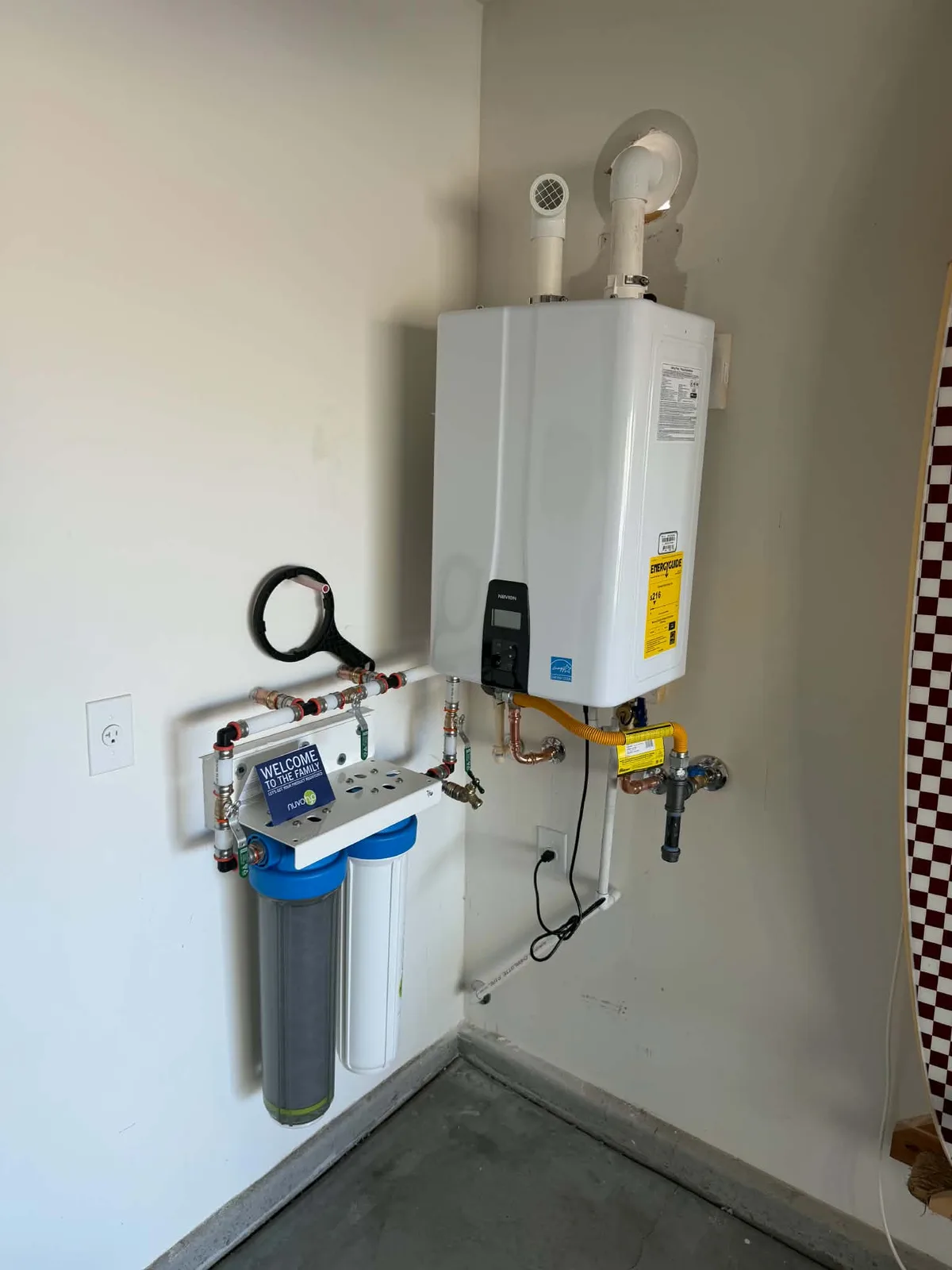
Water heater problems do not always start with no hot water
Water heater issues often begin as smaller behavior changes. Hot water may arrive more slowly, fade earlier during showers, fluctuate from comfortably warm to lukewarm, or seem fine at one faucet but disappointing at another. That pattern matters because complete loss of hot water is only one type of failure. If several fixtures show reduced hot-side flow while the cold side remains normal, the heater connections or hot-water distribution may be part of the problem. If hot water volume is fine in the morning but poor after normal household use, recovery and demand need to be considered rather than assuming a piping issue.
The heater itself also deserves attention when you notice moisture around the base, rust-colored water on the hot side, unusual noises, or temperature inconsistency that was not there before. These symptoms do not all point to the same repair. Some involve the heater, some involve nearby valves or connections, and some tie back to fixture-specific mixing problems. During a service visit, it helps to explain whether all hot fixtures are affected equally, whether the problem is worse after a certain appliance runs, and whether the cold side behaves normally at the same time. That hot-versus-cold comparison keeps the diagnosis focused and can prevent replacing a heater when the real issue is farther down the line.
- Compare hot-water performance at the kitchen, showers, and lavatories.
- Mention leaks, rust tint, or noises near the heater.
- Say whether the cold side stays stable while hot performance changes.
Filtration, softening, and reverse osmosis without making assumptions about the water
Water quality conversations work best when they start with your actual water and your actual goals. Some households are bothered mainly by taste or odor at the kitchen tap. Others want to reduce spotting on fixtures, improve soap performance, or protect appliances from scale buildup. In Peoria, conditions can vary by supplier and by property, so it is better to review the applicable water report or test your own water than to assume one citywide hardness number tells the whole story. Just as important, hardness and scale concerns do not automatically mean drinking water is unsafe. Treatment choices should match the concern instead of reacting to a label alone.
Point-of-use and whole-home options solve different problems. A reverse osmosis system is commonly chosen for drinking and cooking water at a dedicated faucet, while broader filtration or conditioning may be intended to address sediment, taste, or scale effects throughout the home. Homeowners often benefit from listing the symptoms they want to change: white spotting, shortened fixture life, taste preferences, cloudiness that clears, or buildup on shower glass. That makes the recommendation more practical. It also avoids buying more equipment than needed. A good consultation explains what each system is designed to improve, what it does not do, and how service access and filter changes fit into everyday use.
- Start with symptoms and, if possible, a current water report or test.
- Choose point-of-use or whole-home treatment based on goals, not guesswork.
- Water hardness concerns are about scaling and performance, not an automatic safety issue.
Fixture replacements and bathroom updates should solve daily annoyances too
Many plumbing visits begin with something that seems small: a toilet that runs intermittently, a kitchen faucet with uneven spray, a sink that drains slowly even after repeated clearing, or a shower that never feels balanced between pressure and temperature. These are good times to think beyond replacing parts one by one. If a fixture is difficult to clean, poorly located, constantly needing adjustment, or failing in a space you already plan to refresh, the service call can become part of a smarter update. The goal is not to turn every repair into a remodel, but to make sure a replacement addresses how the room is actually used.
Bathroom and fixture planning also benefits from the same diagnostic mindset as larger plumbing work. If a new faucet is going into a vanity where pressure has always been inconsistent, confirm whether the issue is the fixture, local stops, branch piping, or only the hot side before deciding the old faucet was the entire problem. If a toilet clogs frequently, bowl performance and drain conditions both deserve consideration. In kitchens, sink and disposal choices should account for how the drain line has behaved, not just what looks good at the counter. Thoughtful fixture work can improve reliability, cleaning, accessibility, and everyday comfort when the plumbing beneath the finish materials is considered too.
- Use repair visits to identify fixture choices that reduce repeat annoyances.
- Confirm whether symptoms come from the fixture or the piping serving it.
- Coordinate updates so new finishes are not installed over unresolved plumbing issues.
What to expect from a professional plumbing visit in Peoria
A productive service visit usually starts with your observations, not with tools. Expect questions about when the problem began, whether it is getting worse, whether it affects hot, cold, or both, and whether one fixture triggers trouble somewhere else. That information helps the plumber choose a diagnostic path. Goodfellas Plumbing serves the Phoenix metro and confirms availability by phone. The company describes clear repair options and an upfront scope before approved work, which is valuable when there are several possible causes. Homeowners can help by clearing access to sinks, shutoffs, the water heater area, and any spaces where leaks or backups have been noticed.
Not every visit ends with the biggest repair. Sometimes the best outcome is learning that a symptom is localized and can be addressed at a single fixture. Other times, diagnosis shows that several smaller symptoms share one source, making a broader repair more sensible. If you have been debating a regulator, repipe, drain cleaning, or water-treatment upgrade, be ready to describe what changed first and what has stayed consistent. Photos or short notes can be useful if the issue is intermittent. The goal of the visit should be clarity: what the likely cause is, what repair options exist, what each option is meant to solve, and what signs would justify a larger next step later.
- Provide a symptom timeline, especially for intermittent pressure changes.
- Clear access to fixtures, shutoffs, and the water heater area.
- Ask which option addresses the cause versus only the immediate symptom.
Helpful answers
Plumbing questions in Peoria
How can I tell whether weak water pressure is a whole-home problem or just one fixture?
Start by comparing several fixtures and compare hot water to cold water at the same location. If both sides are weak everywhere, the problem may be broader. If cold is normal but hot is weak in multiple places, focus on the hot-water side first. If only one sink or shower has trouble, the issue is often local to that fixture or branch. That distinction helps avoid jumping straight to a regulator or repipe.
When should I worry that a clog is actually a sewer problem?
Be more concerned when several fixtures act up together, especially if lower fixtures back up when higher ones are used. Toilet bubbling, a tub filling when a sink drains, or repeated backups after temporary clearing can all point beyond a single fixture clog. A one-off slow sink is usually different from a pattern affecting multiple drains. The more the symptom spreads across the home, the more important a sewer-focused diagnosis becomes.
Do I need a water softener or reverse osmosis system in Peoria?
Not automatically. Water conditions can vary by supplier and by property, so the best choice depends on your actual water and your goals. If your main concerns are taste or drinking water at the kitchen sink, reverse osmosis may fit. If your concerns are spotting, scale, or soap performance across the house, another treatment approach may make more sense. Start with a recent water report or a test rather than assuming one citywide condition.
What information should I have ready when I call for plumbing service?
The most useful details are what changed, when it started, and whether the symptom affects hot water, cold water, or both. Mention if one fixture causes trouble somewhere else, such as a toilet bubbling when the shower runs. Say whether the issue is constant or intermittent and whether any shutoff changed it. For leaks, note where you saw moisture or heard water. Those details make diagnosis faster and more accurate.
Where we work
Serving Peoria and the Phoenix Metro
Goodfellas Plumbing provides service at customer properties. Contact us with your street address, the plumbing issue and any access instructions so we can confirm availability. The geographic reference below represents an area we serve, not a walk-in office or a guaranteed response radius.
More service guides in Arizona
Local reference information
Public references provide geographic or regional water context; they do not imply endorsement of Goodfellas Plumbing.

