
Your local service guide
Good people. Practical solutions.
Plumbing problems rarely arrive at a convenient time. In Glendale, a small drip, slow drain, or lukewarm shower can turn into a bigger interruption if the underlying issue is ignored. The best next step is not always the fastest repair; it is the one that matches the symptom, the age and condition of the system, and the practical limits of the space where the equipment sits.
Goodfellas Plumbing serves the Phoenix metro with residential and commercial plumbing, including 24/7 emergency phone support. This guide focuses on what homeowners can reasonably sort out before work begins: how to triage urgent situations, what to ask about repair versus replacement, and how to think through options for water heaters, fixtures, leaks, and maintenance without guessing.
When a plumbing problem needs immediate attention
Not every plumbing issue is an emergency, but some signs call for quick action. A burst supply line, a sewer backup, a leak that is spreading across flooring, or a water heater that is actively leaking can create damage far beyond the fixture itself. If you smell gas near a water heater or other appliance, leave the area right away and call emergency services or the gas utility from a safe location. Do not stay behind to wait for a plumbing callback.
For less dramatic problems, triage means noticing what has changed and what is still working. Is water still available in the home? Is the leak controlled by a shutoff? Is the problem isolated to one fixture or affecting several? Those details help a plumber decide whether the issue likely involves a single component, a partial blockage, or a broader failure in supply or drain piping.
- Shut off the nearest safe water supply if you can do so without risk.
- Move belongings away from active leaks if water is spreading.
- Keep a note of what stopped working and when it started.
Repair or replace the water heater: what actually changes the answer
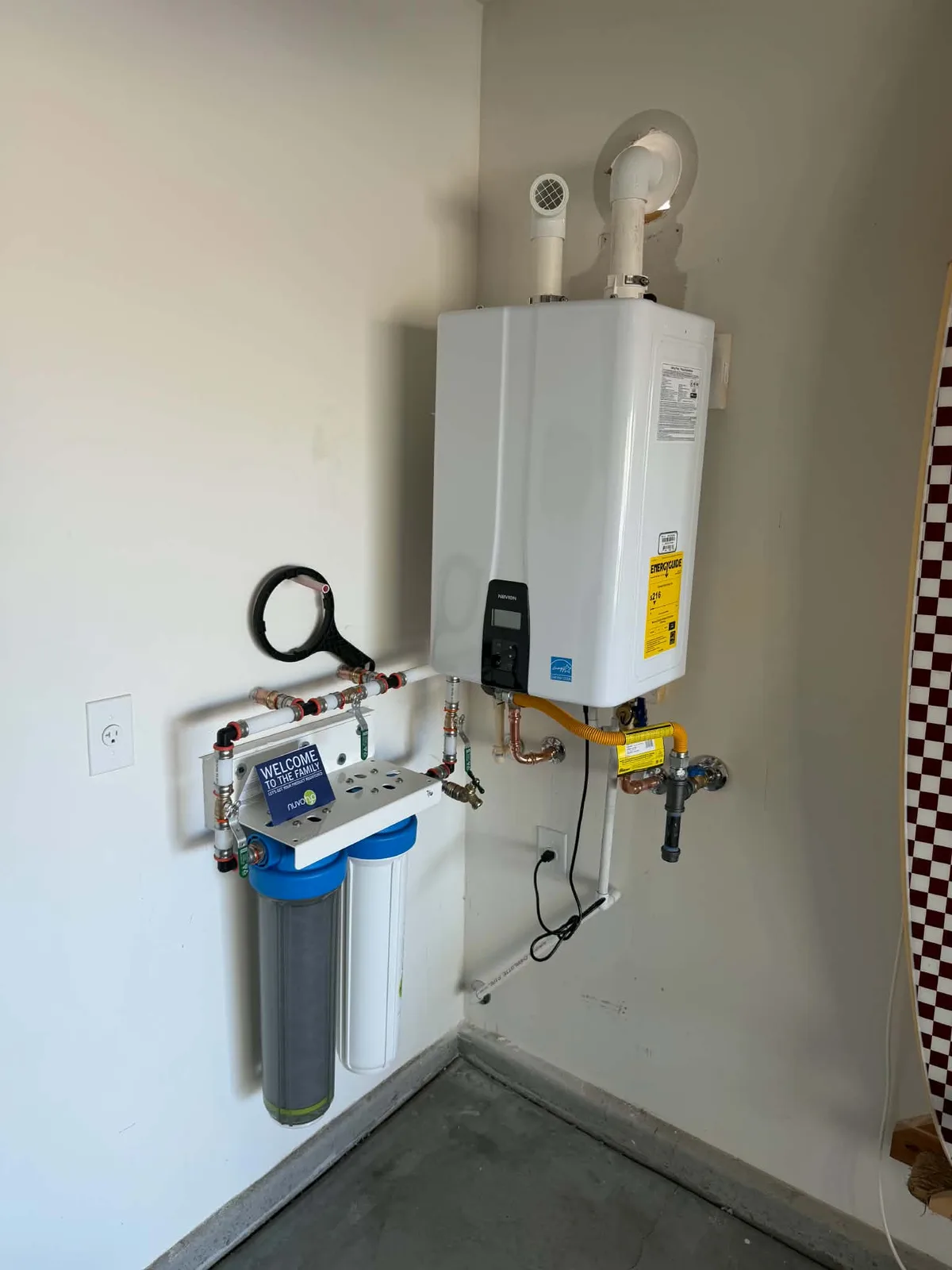
Water heater decisions usually come down to capacity, symptoms, and installation constraints. If the unit is making hot water but runs out sooner than it used to, the tank may be undersized for current demand, or sediment and aging components may be reducing useful capacity. If the heater is showing inconsistent temperatures, frequent shutdowns, or recurring pilot or ignition trouble, repair may restore function if the problem is isolated. If the tank is leaking from the body, replacement is usually the practical direction because the vessel itself has failed.
Installation constraints matter as much as the symptom. A water heater that no longer fits current space requirements, venting needs, fuel type, or clearances may limit repair options. Homeowners often want a simple yes-or-no answer, but a fair recommendation depends on whether the unit can be restored reliably and whether the home’s layout can support a like-for-like replacement or a different style of equipment.
- Frequent outages or inconsistent heat often point to a repairable control issue or a larger aging problem.
- A leaking tank body is usually a replacement situation, not a repair.
- Capacity questions are as important as mechanical symptoms.
Slow drains, backups, and when the problem may be deeper in the line
A single slow sink is often a local blockage, while repeated backups in more than one fixture can point to a shared drain or sewer issue. Kitchen lines collect grease and food residue; bathroom lines commonly collect hair, soap, and everyday buildup. If the same problem returns soon after a basic cleaning, there may be a longer restriction in the pipe rather than a simple clog close to the fixture. That is when a broader inspection becomes more useful than another quick attempt at clearing the same spot.
Sewer concerns deserve extra caution because they affect more than convenience. Gurgling fixtures, wastewater odors, or sewage coming back up in a lower drain can indicate that the system is struggling to move water away fast enough. A plumber may recommend drain cleaning, a sewer line assessment, or a different approach if repeated clogging suggests the line has structural issues, improper slope, or heavy buildup that needs more than a surface fix.
- One fixture affected often means a local drain issue.
- Multiple fixtures affected can signal a shared line or sewer problem.
- Recurring clogs deserve diagnosis, not just another temporary clearing.
A clear next step
Not sure where to start?
Describe the symptoms. We’ll help you arrange the right visit.
Leaks, pressure changes, and when repiping enters the discussion
Leaks are not all obvious puddles under a sink. Some show up as cabinet swelling, stained drywall, damp flooring, or a water meter that seems to move when no fixtures are running. A hidden leak can remain small for a while and still cause expensive damage if it is left alone. The right first step is to narrow down whether the source is a fixture connection, a supply line, a valve, or a pipe inside a wall or ceiling. That distinction helps keep the repair focused.
Pressure complaints also deserve context. Low pressure in one fixture may point to a clogged aerator or a local valve problem, while pressure changes throughout the home can suggest a broader supply issue or pipe restriction. Repiping becomes a conversation when leaks are recurring, pipe material is failing, or the plumbing layout can no longer be kept dependable with isolated repairs. It is not the first answer to every leak, but it is worth discussing when small repairs stop solving the same pattern.
- Track whether the issue is isolated or affecting several fixtures.
- Hidden leaks often show up as stains, swelling, or unexpected meter movement.
- Repiping is considered when recurring failures make piecemeal repairs inefficient.
Water heaters and water quality choices that affect daily comfort
Homeowners sometimes think about water quality only when taste or scale-like residue becomes noticeable. In reality, filtration choices should match the actual water conditions at the property, not a general assumption about the city. Water conditions can vary by supplier and location, so it is smarter to check a utility report or use testing if you want specific information. Once you know what you are dealing with, a plumber can help narrow the options among filtration, softening, or reverse osmosis based on the goal, whether that is taste, odor, sediment control, or a more targeted drinking-water setup.
These systems are not interchangeable. A whole-home filter treats water entering the house, which can help reduce sediment or improve overall feel at taps and showers. A softener addresses minerals that create scale, which can matter for fixtures and appliances. Reverse osmosis is typically used for a dedicated drinking-water point and offers a more focused solution. The right choice depends on what problem you are trying to solve, and on how much maintenance you are willing to keep up with over time.
- Match the system to the problem instead of buying the most elaborate option.
- Use actual testing or utility information rather than guessing at conditions.
- Whole-home, softening, and RO systems serve different purposes.
Fixtures, kitchen projects, and bathroom updates that work with the plumbing behind them
A fixture replacement can be a simple functional upgrade or the start of a larger project. Toilets, sinks, faucets, and garbage disposals all interact with the existing plumbing in different ways. If the fixture itself is the issue, a targeted replacement can be the cleanest answer. If the surrounding piping, shutoffs, or drain connections are tired or poorly arranged, the project may need a little more planning so the new fixture does not inherit the old problems. That is especially true in kitchens and bathrooms where access matters.
During remodeling, plumbing decisions shape how the room functions after the finishes go in. Drain locations, supply line placement, shutoff access, and fixture compatibility all need to be considered before walls and cabinets close back up. A homeowner does not need to design every detail alone, but it helps to understand that cosmetic updates and plumbing updates are connected. Better planning can reduce the chance that a beautiful new fixture ends up paired with noisy flow, awkward clearances, or repeated service calls.
- Fixture swaps are easier when the surrounding plumbing is in good shape.
- Kitchen and bath remodels should account for access, clearances, and shutoffs.
- The best upgrade is one that looks good and still fits the existing system.
What to expect during a service visit and estimate
A good plumbing visit starts with questions, not tools. The plumber should ask what you noticed, how long the problem has been present, and whether anything has already changed on its own. From there, the work usually focuses on isolating the issue, confirming the likely source, and explaining the available repair paths before anything is approved. That upfront scope matters because the homeowner should understand what the plumber believes is happening and what the next step will address.
In many cases, the most helpful part of the visit is not only the fix but the explanation. For a water heater, that may mean discussing whether a repair addresses the symptom or whether replacement makes better sense because of capacity, age, or installation constraints. For leaks or drain problems, it may mean clarifying whether the repair is localized or whether more work would be needed if the same issue returns. Goodfellas Plumbing’s approach is to provide clear repair options and an agreed scope before approved work begins.
- Expect a symptom-focused conversation before any repair starts.
- Ask whether the recommendation is a short-term fix or a longer-term solution.
- Make sure you understand what is included in the approved scope.
Simple maintenance that helps plumbing last longer
Routine maintenance does not need to be complicated to be useful. The goal is to notice small changes before they become expensive interruptions. Listen for new sounds from fixtures and appliances, watch for staining or moisture around visible connections, and pay attention when water temperature, pressure, or drain speed starts to change. A homeowner who notices patterns early can often choose a targeted repair instead of waiting for a more disruptive failure.
Water heaters, drains, and supply lines each benefit from periodic attention. Drains do better when grease, wipes, hair, and debris are kept out of the system. Supply lines and valves should be checked for corrosion or seepage. Water heaters should be evaluated when performance begins to shift rather than after a complete loss of hot water. If you are unsure whether a problem is normal aging or the start of a larger issue, a focused inspection is usually more helpful than guessing and hoping the problem stays small.
- Watch for changes in sound, temperature, pressure, and drain speed.
- Address small leaks before they spread into cabinets or walls.
- Treat repeated performance issues as a reason to inspect, not ignore.
Helpful answers
Plumbing questions in Glendale
How do I know whether my water heater needs repair or replacement?
Start with the symptom. If the unit still heats but performance is inconsistent, the issue may be a control, ignition, thermostat, or connection problem that can often be repaired. If the tank itself is leaking, the heater usually needs replacement because the vessel has failed. Capacity matters too: if the home has outgrown the heater, a repair may not solve the real problem. Installation constraints can also limit options.
Is low water pressure always a sign of a major plumbing problem?
Not always. A single fixture with low pressure may have a clogged aerator, a worn cartridge, or a local valve issue. If several fixtures are affected, the concern could be broader, such as supply line restriction, a leak, or a problem with the home’s piping. The key is to notice whether the pressure change is isolated or widespread, because that often determines how involved the repair needs to be.
What is the difference between a whole-home filter, a softener, and reverse osmosis?
They solve different problems. A whole-home filter treats the water entering the house and is often used to reduce sediment or improve overall water quality at taps and showers. A softener is aimed at mineral content that can contribute to scale. Reverse osmosis is usually installed for a dedicated drinking-water point and offers a more targeted treatment. The best option depends on the specific water conditions and your goals.
What should I do if I suspect a gas leak near a water heater?
Leave the area right away. Do not switch lights or appliances on or off, and do not wait indoors for a plumbing callback. From a safe location outside, call emergency services or the gas utility. After the immediate hazard is addressed, a licensed professional can inspect the equipment and determine whether repair or replacement is needed. Safety comes first whenever gas is suspected.
Where we work
Serving Glendale and the Phoenix Metro
Goodfellas Plumbing provides service at customer properties. Contact us with your street address, the plumbing issue and any access instructions so we can confirm availability. The geographic reference below represents an area we serve, not a walk-in office or a guaranteed response radius.
More service guides in Arizona
Local reference information
Public references provide geographic or regional water context; they do not imply endorsement of Goodfellas Plumbing.

