
Your local service guide
Good people. Practical solutions.
Summerlin is part of the western Las Vegas valley, where plumbing service often needs a little more planning than a simple same-day stop. Gated entries, model-home communities, shared access points, and remodel coordination can all affect how a repair or installation is scheduled. Goodfellas Plumbing serves residential and commercial customers across the Las Vegas valley, with 24/7 emergency phone availability and repair options explained before any approved work begins.
This guide is meant to help homeowners think through common plumbing needs before a visit is booked. It focuses on triage, access, communication, and the kinds of decisions that come up during repairs or upgrades. If you are comparing options for your home, a quick call can confirm availability and help match the right service to the problem, whether that is a leak, a drain issue, a water heater concern, or a project tied to a kitchen or bath update.
When a plumbing problem cannot wait
Some plumbing problems need immediate attention, but the best first step is not always to start turning fixtures or searching for parts. If water is actively entering a room, if a fixture will not stop running, or if you notice a sudden change that suggests a broken line, the goal is to limit damage and gather the right details for the plumber. In a planned community, it also helps to think about access. Is the problem inside the home, in a garage, in a courtyard, or near a shared wall? That context can affect how quickly the right person can reach the issue.
For suspected gas leaks, do not stay inside to troubleshoot and do not wait for a plumbing callback. Leave the area, avoid switches or ignition sources, and call emergency services or the gas utility from a safe location. For water emergencies, a homeowner can often shut off the nearest fixture supply or the home’s main shutoff if it is easy to reach, but there is no need to perform complicated steps before help arrives. Clear photos and a short description of what changed can make the call more productive.
- Describe whether the problem is active, intermittent, or already stopped.
- Note where access is easiest for a technician or if entry needs to be arranged.
- Keep the focus on safety first, then on damage control and scheduling.
Drain and sewer issues that are worth a careful look
Slow drains, repeated clogs, and sewer odors are not all the same problem, even when they show up in the same house. A sink that empties slowly may point to a local blockage, while more than one fixture backing up can suggest a larger line issue. In a home where remodeling has changed the kitchen or bath layout, drain performance can also be affected by previous work that looked fine on the surface but did not age well. The key is to describe where the symptoms appear and how often they return, not just to say that a drain is “bad.”
A service visit for drains usually starts with the story of the symptoms, then moves to the most likely source of restriction. Good diagnosis matters because the wrong fix can waste time and leave the underlying issue in place. If you are scheduling service around work hours, school pickup, or access rules for a community entrance, it helps to explain that up front. Clear timing details often matter as much as the plumbing detail itself.
- Tell the plumber which fixture is affected first and whether others are involved.
- Mention any prior drain work, repairs, or recent remodeling.
- Ask what inspection or cleaning approach fits the symptoms before approving work.
Leaks, pressure changes, and when repiping enters the conversation
A leak is not only about the water you can see. Staining, warm spots, a musty odor, a soft cabinet base, or a meter that seems active when everything is off can all point to hidden trouble. Pressure changes deserve attention too. If one fixture has weak flow and another seems normal, the issue may be local. If the whole home feels inconsistent, the concern could be broader. Goodfellas Plumbing can discuss repair options and an upfront scope before approved work, which is especially useful when the problem might range from a small repair to a more involved pipe project.
Repiping is not something a homeowner should assume is necessary after one leak, and it is not something to dismiss if several areas are affected. The right question is whether the pipes are failing in one place or whether the pattern suggests a larger system problem. In Summerlin, scheduling may also need to work around access permissions, shared entries, or remodel timelines. That is one reason an accurate inspection and a plain-language explanation of choices matter before anyone starts opening walls.
- Share where the leak appears and whether the problem is recurring.
- Mention low pressure, pressure swings, or rust-colored staining if present.
- If walls or cabinets are already open for another project, say so early.
A clear next step
Not sure where to start?
Describe the symptoms. We’ll help you arrange the right visit.
What to consider before calling about a water heater
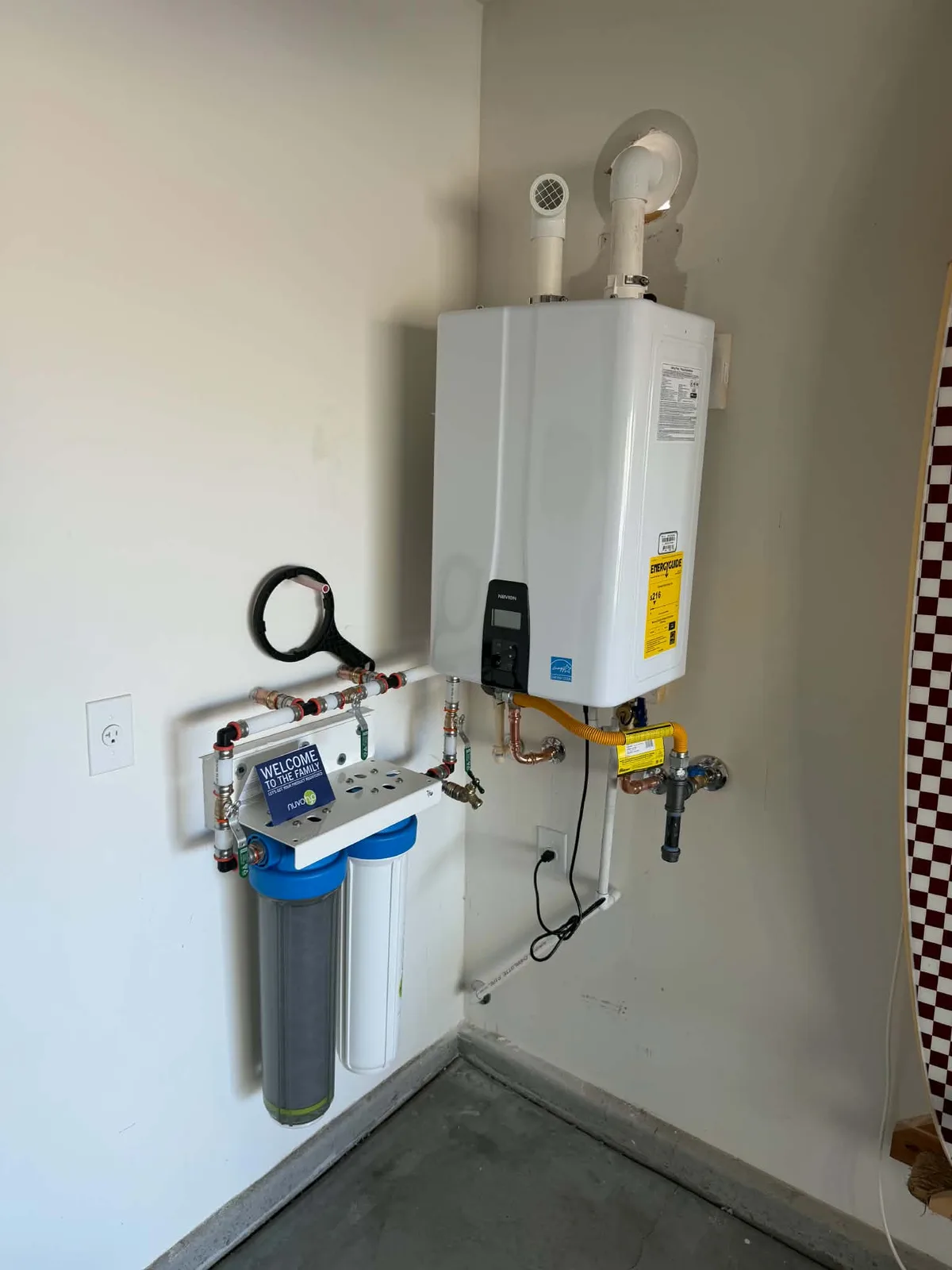
Water heater problems often show up as changes in comfort first. Hot water may run out sooner than expected, take longer to arrive, or fluctuate from one shower to the next. Tanks can also show signs at the base, around fittings, or at the discharge piping area. Those clues help a plumber narrow the problem before recommending repair or replacement. A good service call should compare the condition of the unit, the symptoms you are noticing, and how the heater fits into the household’s daily routine.
Because Summerlin homes can have different access points and equipment layouts, the logistics matter too. A heater in a garage, closet, or utility area may be easier or harder to service depending on what surrounds it. If you are coordinating with a remodel, it may make sense to discuss the heater at the same time as other work so access is not blocked twice. The point is not just getting hot water back, but making sure the fix fits the home’s layout and schedule.
- Note whether the issue is no hot water, limited hot water, or temperature swings.
- Tell the plumber the age range of the heater if you know it.
- Mention whether the area is open and easy to reach or tied to another project.
Filtration, softening, and reverse osmosis without the jargon
Water treatment conversations can become confusing because people use the words filtration, softening, and reverse osmosis as if they mean the same thing. They do not. Filtration is generally about reducing certain unwanted particles or tastes. Softening is a treatment approach for very hard water. Reverse osmosis is a more targeted under-sink style system used for specific drinking-water goals. In Southern Nevada, the regional supply is described as very hard by the Southern Nevada Water Authority, but that does not mean every home has the same exact experience or that the water is unsafe to drink. The right choice depends on your fixtures, household preferences, and what you want the system to do.
For a homeowner, the most useful question is not “Do I need the best system?” but “What problem am I trying to solve?” That might be scale on fixtures, a preference for different drinking water, or a desire to protect certain appliances or finishes. If you are planning a kitchen update, a bathroom refresh, or a utility-area change, treatment equipment can often be coordinated with the rest of the work so the installation is neater and easier to maintain later.
- Separate drinking-water goals from whole-home treatment goals.
- Ask how much space the equipment needs and where it will sit.
- Coordinate treatment decisions with other plumbing or remodel work when possible.
Fixtures, kitchens, and baths: making plumbing fit the project
Fixture replacement sounds simple until it meets real-world planning. A new toilet, sink, faucet, or disposal may seem like a direct swap, but the surrounding plumbing, cabinet clearances, countertop cutouts, and shutoff condition all affect the job. When a kitchen or bath is being remodeled, plumbing work should be part of the plan rather than a last-minute add-on. That is especially true if access to the home depends on scheduling around contractors, delivery windows, or community entry permissions.
Good coordination reduces surprises. If the new fixture changes dimensions or location, the plumber may need to adjust supply lines, drain alignment, or mounting details before final installation. It is also worth thinking about maintenance after the project is complete. A beautiful fixture that is hard to service later can turn an upgrade into a nuisance. Talking through those tradeoffs early usually leads to a better result than choosing only on appearance.
- Share product specs or photos before the visit if you have them.
- Let the plumber know whether cabinets, walls, or flooring are being changed.
- Ask how the new fixture will affect future shutoff access and serviceability.
What a good service visit should look like
A smooth plumbing appointment starts before anyone arrives. In a community with planned access points, the homeowner may need to confirm entry instructions, parking details, gate permissions, or the best way to reach the home or commercial space. The more accurate the setup, the less likely the visit is to be delayed by avoidable logistics. This is especially helpful if the problem is urgent, if the property has multiple entrances, or if another contractor is already on site.
Once the technician is there, the visit should be a conversation, not a guess. The issue should be described in plain terms, then inspected, then matched with repair options that fit the situation. Goodfellas Plumbing notes clear repair options and upfront scope before approved work, which helps homeowners make decisions without feeling rushed. If the repair is tied to an active remodel, it can also be useful to coordinate the sequence of work so drywall, tile, or cabinet crews are not blocked by plumbing uncertainty.
- Confirm how the technician should enter and where to park or check in.
- Have the symptom history ready: when it started, what changed, and what got worse.
- Ask for the difference between immediate repair needs and optional next-step work.
Simple maintenance that helps avoid bigger plumbing problems
Routine care does not need to be complicated to be useful. Keeping an eye on under-sink areas, checking shutoff valves for accessibility, and noticing early changes in drain speed or fixture sound can help you catch a problem before it becomes disruptive. In homes with regular remodeling or busy family schedules, small issues are easy to ignore until they add up. A short seasonal walk-through of the kitchen, baths, laundry area, and water heater space can reveal a leak, loose connection, or slow drain early enough to handle calmly.
Maintenance is also about planning. If you know a fixture is due for replacement or a water heater is reaching the point where service questions are becoming frequent, it can be smarter to talk through options before there is a total failure. That approach is especially helpful in Summerlin when access, scheduling, and other project timelines may need coordination. A little preparation can make the next service call simpler and less disruptive.
- Keep shutoff valves visible and easy to reach.
- Watch for recurring clogs, drips, or stains rather than treating each one as isolated.
- Plan plumbing updates before they become emergencies, especially during remodeling.
Helpful answers
Plumbing questions in Summerlin
How should I prepare if a plumber needs access in a planned community setting?
Give the service team the best access details you have before the visit: gate instructions, parking notes, building entry steps, and any limits on when someone can be onsite. If a contractor is already working in the home, mention that too. Clear access information helps avoid delays and lets the technician focus on the plumbing issue instead of logistics.
Is very hard regional water the same thing as unsafe drinking water?
No. Water hardness and water safety are different issues. The regional supply may be described as very hard, which can affect scale and fixture performance, but that does not mean the water is unsafe to drink. A homeowner should choose treatment based on the specific goal, such as reducing scale, improving taste, or adding a drinking-water system.
When does a leak become a bigger concern than a small repair?
A leak deserves more attention when it returns after a repair, appears in more than one place, causes pressure changes, or shows up as stains, odors, or hidden moisture. Those patterns can suggest a larger issue than a single fitting. A plumber can help determine whether the fix is local or whether the pipes need a broader evaluation.
What should I share before scheduling plumbing work during a remodel?
Share the project timeline, what areas are being opened, and whether cabinets, flooring, tile, or walls are already being removed. If there are product selections, model numbers, or layout changes, those details are useful too. The more the plumber understands about the remodel sequence, the easier it is to coordinate plumbing work without causing rework or delays.
Where we work
Serving Summerlin and the Las Vegas Valley
Goodfellas Plumbing provides service at customer properties. Contact us with your street address, the plumbing issue and any access instructions so we can confirm availability. The geographic reference below represents an area we serve, not a walk-in office or a guaranteed response radius.
This reference point is in Summerlin South, one part of the wider Summerlin community. It does not define the community’s full boundary.
View the service area on a mapMore service guides in Nevada
Local reference information
- U.S. Census geographic reference
- Southern Nevada water quality information
- Summerlin community boundaries
Public references provide geographic or regional water context; they do not imply endorsement of Goodfellas Plumbing.

