
Your local service guide
Good people. Practical solutions.
When a plumbing problem shows up, the hardest part is often not the repair itself. It is deciding whether the issue is an emergency, what it may be affecting, and which service to request so the problem gets routed correctly the first time. In a place like Las Vegas, that matters because the city is only one part of the wider valley. The right help depends on the property, the symptom, and where the issue seems to start.
Goodfellas Plumbing serves the Las Vegas valley for residential and commercial plumbing, with 24/7 emergency phone support and clear repair options shared before approved work begins. This guide is built to help homeowners think through the next step with less stress: when to leave the property, when to shut things off, when a drain or water heater issue points to a specific service, and how to prepare for a service visit without guessing at the fix.
When a plumbing problem needs immediate attention
Some plumbing problems are urgent because they can damage the property quickly, interrupt essential use, or point to a safety concern. A burst line, active ceiling stain, backed-up sewage, or a leak you cannot control usually deserves immediate phone contact so the issue can be routed correctly. If you smell gas, do not stay and wait for a plumbing callback; leave the area and call emergency services or the gas utility from a safe location.
The key in an emergency is to focus on what is happening now, not on solving the whole problem yourself. If the water source can be safely isolated, that may limit damage while you wait. If the situation involves sewage, contaminated water, or an electrical hazard near standing water, keep people away from the area and avoid turning fixtures on and off repeatedly just to test them. Clear information helps dispatch the right service faster.
- Call right away for uncontrolled leaks, sewage backup, or a fixture that cannot be contained.
- If gas is suspected, leave first and contact emergency services or the gas utility from outside.
- Tell the dispatcher what is wet, what is off, and whether the problem is getting worse.
Drain backups: knowing when it is a clog versus a sewer issue
A slow sink or tub usually starts as a drain problem in one fixture, while multiple fixtures acting up at once can suggest a larger blockage downstream. That difference matters. A single sluggish sink may point to a localized clog, but a toilet that backs up when the washer drains, or a lower-level drain that gurgles when another fixture runs, may call for a broader sewer-and-drain inspection. The best service request is the one that matches the pattern, not just the symptom you saw first.
Homeowners often try several fixtures before deciding whether the issue is minor. That can be useful information if you can do it safely, but avoid using harsh drain chemicals or improvising with tools that can damage pipes. Instead, note which drains are slow, whether the blockage is complete or partial, and whether the issue affects more than one room. That helps a technician decide whether the work belongs under drain cleaning, sewer service, or a related repair.
- One fixture only often points to a local drain issue.
- Several fixtures at once can signal a main line problem.
- Listen for gurgling, bubbling, or water rising in an unexpected drain.
Leaks, low pressure, and the question of hidden pipe problems
Not every leak announces itself with a puddle. Some show up as a damp cabinet bottom, a ceiling stain, a soft spot in drywall, or a meter reading that seems inconsistent with what the household used. Low pressure can also be a clue, though not every pressure complaint means the same thing. Mineral buildup, a failing valve, a partially blocked line, and a hidden leak can all make fixtures behave differently. The job is to identify the source rather than assume the first explanation.
If a leak appears near a wall, slab edge, or overhead area, it is worth asking whether leak detection or repipe evaluation is the right path. A localized repair may be enough when the problem is accessible and isolated. A repipe discussion becomes more relevant when there is repeated leakage in different spots, aging branch piping, or a pattern that keeps returning after repairs. The goal is not to overreact; it is to avoid paying repeatedly for the same unresolved issue.
- Watch for stains, musty odors, unexplained dampness, and changing pressure.
- Ask whether the issue looks isolated or part of a wider pipe condition.
- Repeated repairs in different places can justify a repipe conversation.
A clear next step
Not sure where to start?
Describe the symptoms. We’ll help you arrange the right visit.
Hot water problems and how to describe them clearly
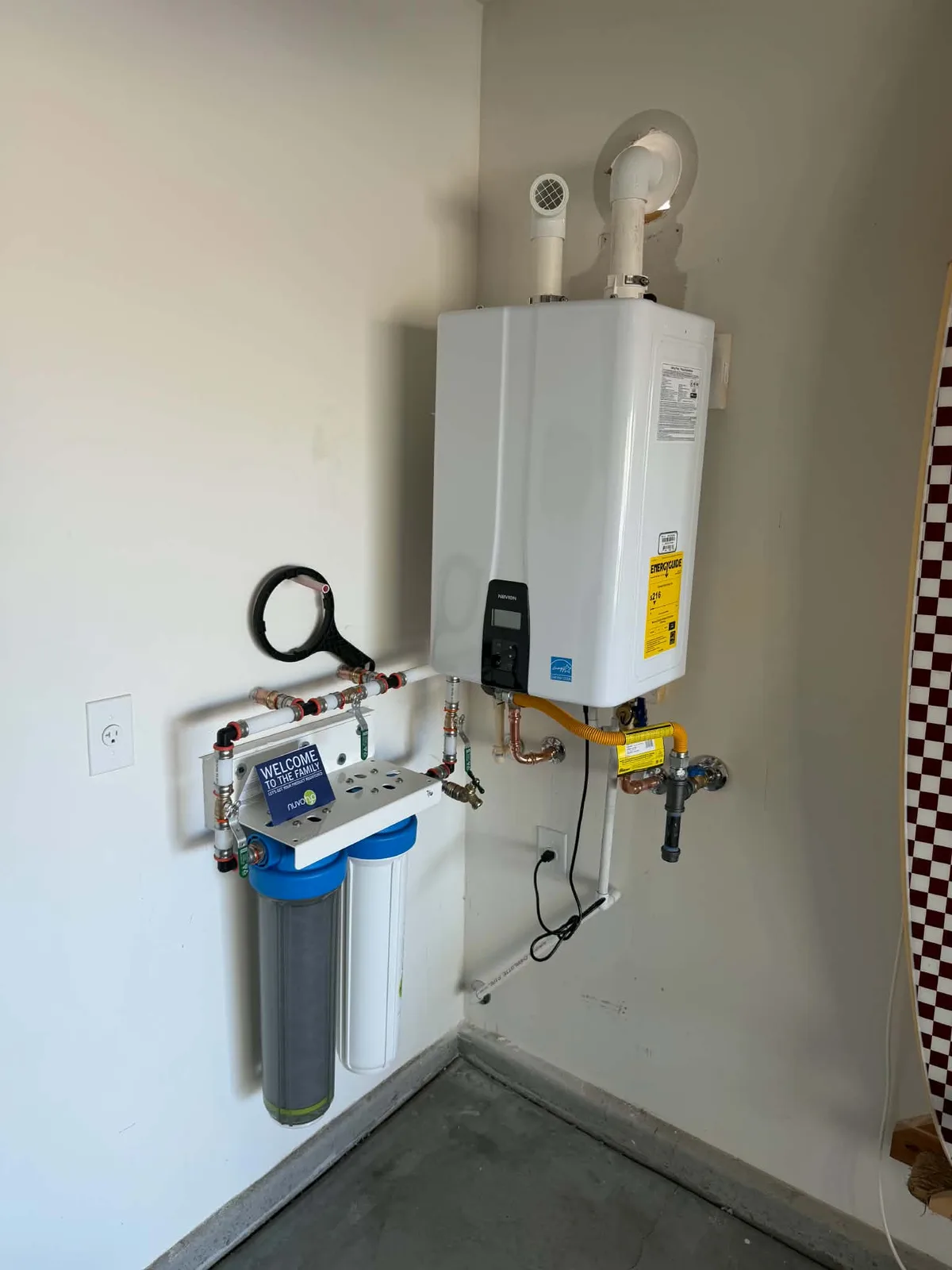
Water heater issues are easier to route when you describe the symptom instead of guessing the cause. Is there no hot water at all, is the hot water running out too quickly, or does the water never get as warm as it used to? Those are different problems, and they can lead to different service choices. If the unit is leaking, making unusual sounds, or producing water that changes temperature unpredictably, that is information to share up front. It helps determine whether repair, replacement planning, or another check is more appropriate.
For homeowners, the important part is to avoid turning a hot water problem into a bigger one by repeatedly testing fixtures or trying to force the system to recover. A heater issue can affect showers, dishwashing, and laundry, but it can also involve venting, combustion, electrical components, or water damage depending on the type of system. A clear phone description makes it easier to schedule the correct kind of water heater service without a guessing game.
- Say whether the issue is no hot water, not enough hot water, or fluctuating temperature.
- Mention any leaking, noises, or rust-colored water if present.
- Ask whether the system should be repaired or evaluated for replacement planning.
Filtration, softening, and reverse osmosis: matching treatment to the problem
Water treatment should start with the concern you actually have. Some homeowners want better taste at the kitchen sink. Others are trying to reduce spotting on fixtures or build a treatment setup that fits a particular household need. Southern Nevada Water Authority describes regional water as very hard, but that does not mean every address has the same supply characteristics or that treatment needs are identical. The right question is what you want improved and where in the home you want that improvement to happen.
A whole-home filtration discussion is different from an under-sink reverse osmosis system, and a softener conversation is different again. The choice depends on the fixtures involved, the available space, maintenance preferences, and whether the goal is broad household treatment or just drinking-water quality at one point of use. A good service call should sort through the tradeoffs with plain language, so you know whether water filtration, reverse osmosis, or another treatment option fits the situation.
- Point-of-use systems address one tap; whole-home systems affect more of the house.
- Taste, spotting, and scale concerns do not always call for the same solution.
- Ask what maintenance the system will need after installation.
Fixtures, sink work, and remodel decisions that avoid rework
Fixture problems can be simple or deceptively involved. A dripping faucet, loose toilet, leaking shutoff, or sink that drains poorly may need a targeted repair. But when you are changing the layout of a kitchen or bathroom, the decision shifts from fixing a part to planning how the plumbing should support the new use of the room. That is why it helps to identify whether your request is a repair, a fixture upgrade, or part of a larger remodeling project before the visit.
For kitchens and baths, the plumbing choice should fit the way the room is used every day. A sink that sees heavy use may need different attention than one in a guest bath. A remodel can also expose old piping, outdated connections, or valve issues that should be addressed before new finishes go in. Starting with a clear scope helps keep the project from stalling when hidden plumbing details appear.
- Repair requests and remodel requests are not the same type of visit.
- Mention whether the issue affects a faucet, sink basin, toilet, or supply line.
- If the room is being updated, ask how plumbing should be sequenced with the project.
What a service visit should feel like from the homeowner side
A useful plumbing visit starts before anyone opens a toolbox. The office needs the right symptom, the right property type, and the right urgency level so the visit is routed correctly. Once the technician arrives, the main goal is to confirm the problem, explain the options, and make sure you understand the scope before approved work begins. That process should feel direct and practical, not rushed. If the issue is not the one you thought it was, the conversation should move toward the actual source rather than forcing the original assumption.
Homeowners can help by making the problem area accessible, keeping pets and small children clear of the workspace, and sharing any past repairs that may matter. If you know what has already been tried, say so. That information can prevent duplication and help the technician decide whether the problem belongs to drain service, leak detection, a heater check, or another category. Clear communication is often the fastest path to the correct fix.
- Have the key symptom ready: leak, clog, no hot water, pressure change, or fixture issue.
- Share previous repairs, recent remodel work, or anything that changed before the problem started.
- Expect the technician to confirm the issue and explain the approved scope before work proceeds.
Routine maintenance that helps small issues stay small
Most homeowners do not need to think about plumbing every day, but a little attention can prevent avoidable stress. Pay attention to slow changes: a faucet that starts to stick, a drain that gets noisier, a toilet that refills strangely, or a water heater that behaves differently than usual. Those changes are often easier to handle before they become a no-water morning or a larger repair. Routine maintenance is less about being handy and more about noticing patterns early.
It also helps to know which problems deserve a scheduled check instead of a wait-and-see approach. Recurring drain trouble, repeated leaks, changes in water pressure, and inconsistent hot water are all signs that the system may need a closer look. A maintenance mindset does not mean doing repairs yourself; it means calling the right service at the right time so a small issue does not keep returning.
- Watch for gradual changes rather than waiting for a complete failure.
- Recurring problems usually deserve more than a one-time reset.
- Use the issue pattern to decide whether maintenance, repair, or replacement planning makes sense.
Helpful answers
Plumbing questions in Las Vegas
How do I know whether I should call for an emergency plumber or schedule a normal visit?
Call right away if water is actively damaging the home, sewage is backing up, or the problem is spreading fast. A normal visit is usually appropriate for a slow drain, a minor drip, or a fixture that still works but needs attention. If you are unsure, describe what is happening now, what rooms are affected, and whether the issue is getting worse. That helps route the call correctly.
What should I do if I smell gas near a plumbing appliance?
Leave the area immediately and do not try to troubleshoot the source yourself. From a safe location, contact emergency services or the gas utility. Do not wait for a plumbing callback before taking that step. Gas smells are treated differently from ordinary plumbing problems because the priority is personal safety and stopping exposure before any repair discussion begins.
Why does the service area matter if the company serves the Las Vegas valley?
Because the valley is broader than the city, and the right help depends on where the property is located and what the problem is. A request should be routed based on the actual service location, the symptom, and whether the issue is residential or commercial. That makes it more likely the technician arrives prepared for the correct type of plumbing work instead of a generic visit.
Can hard water mean my drinking water is unsafe?
No. Hard water and water safety are not the same thing. Regional water can be very hard and still be suitable for use, while treatment choices may be based on taste, spots on fixtures, scale buildup, or point-of-use preferences. If you are considering filtration, softening, or reverse osmosis, focus on the specific goal for your home rather than assuming one condition means a safety problem.
Where we work
Serving Las Vegas and the Las Vegas Valley
Goodfellas Plumbing provides service at customer properties. Contact us with your street address, the plumbing issue and any access instructions so we can confirm availability. The geographic reference below represents an area we serve, not a walk-in office or a guaranteed response radius.
More service guides in Nevada
Local reference information
Public references provide geographic or regional water context; they do not imply endorsement of Goodfellas Plumbing.

